Bookbinding has a way of turning a modest hobby into a workshop. You begin with a needle, a spool of thread and a stack of paper, then find yourself hunting for greyboard in the right thickness, linen thread in the right size, and a bone folder that does not feel like a plastic spoon. Sourcing all of that in Britain is perfectly doable, but it rewards a bit of homework. Suppliers differ enormously in what they stock, how they cut board, and whether they will post a heavy parcel flat. Here is what to check before you spend.
It is tempting to open a supplier's website and fill a basket. Resist it. A pamphlet stitch needs almost nothing. A full case binding needs board, covering material, endpapers, mull, thread, adhesive, spine lining and a good deal of patience — and each of those comes in more variations than a beginner expects.
Write the list before you browse. If you are covering a book around 200mm tall, your cloth needs to wrap the boards with turn-ins of roughly 15mm on three sides, which means the fabric has to be wider than the book by a comfortable margin once you account for the spine. For the boards, you need two cover pieces, one spine piece, and spares for the mistakes you will inevitably make. A written list keeps the order focused, and it makes it easy to buy from two or three suppliers when no single shop has everything you need.
Book cloth is woven cotton, usually backed with paper and coated so that paste and PVA do not strike through to the surface. Buckram is heavier, stiffer and more textured — excellent for reference books, repairs and anything that needs to survive being handled. Both are generally sold by the metre or half metre, and widths vary between suppliers, so check before assuming one metre will cover two projects.
Dressmaking fabric can be pressed into service, but it almost always needs backing first — starch paste and tissue, left to dry under weight — before it behaves like book cloth. That is a skill in itself, not a shortcut for a first project.
Cover board goes by several names: greyboard, millboard, Davey board. Thickness is quoted in millimetres, and occasionally in the older "point" system, where one point is a thousandth of an inch. As a rough guide, 1.5mm to 2mm suits small books, while 2.5mm and up holds larger volumes flat. Grain direction matters more than most beginners realise: on cover boards the grain should run parallel to the spine, so the board bends where you want it to and stays rigid where you need strength. If a listing does not say, ask.
Linen thread is sold by size, and the common ones are 18/3 for slim sections, 25/3 for general work and 35/3 for heavy, thick books. Waxed or unwaxed both work; a small block of beeswax costs little and lasts for years. Needles should be proper bookbinding needles, which have a rounder point than household sharps and slip between sections rather than splitting the paper.
Buy fewer, better tools and add as projects demand them.
Everything else — nipping press, sewing frame, lying press, finishing tools — can wait until a project genuinely calls for it. Second-hand examples in working order appear regularly, often for less than a new entry-level version.
A small number of long-established trade suppliers serve binders, conservation studios and libraries. They are the best source of book cloth in dozens of colours, proper linen thread, board in multiple thicknesses, specialist adhesives and tools. Many offer cut-to-size board and sample swatch packs. Postage on heavy board can be steep, so it is worth combining an order rather than buying a couple of sheets at a time.
High street chains and independent art shops cover the basics well: PVA, cutting mats, blades, sometimes greyboard and bone folders. Handy for topping up mid-project, less useful for cloth.
The place for endpapers, text paper and decorative sheets. Many now sell online, some by the single sheet. Check the grain direction and whether the paper is suitable for folding rather than just printing.
Useful for bulk board, wrapping paper, tapes and large quantities of waste paper for gluing out. Often cheaper than craft shops for plain materials.
Retired binders' equipment, tool fairs, auction lots and antique markets still turn up presses, bone folders and finishing tools. Inspect before buying, and check that moving parts actually move.
Most disappointment comes from listings that are accurate but incomplete. Run through this list before you pay.
If a listing does not state grain direction, ask before you buy. The answer tells you as much about the supplier as it does about the board.
Order small and specific: a cloth swatch pack, one sheet of board in the thickness you think you need and one a little thinner, a spool of 25/3 linen thread, beeswax, needles, PVA, a bone folder, blades, a rule and a mat. Bind something modest, then note what you actually used and what you ran short of. Keep a page per supplier with product codes and a sentence on how the cloth behaved once pasted. That record, built over three or four orders, is worth more than any recommendation — it turns guesswork into a shortlist you trust.
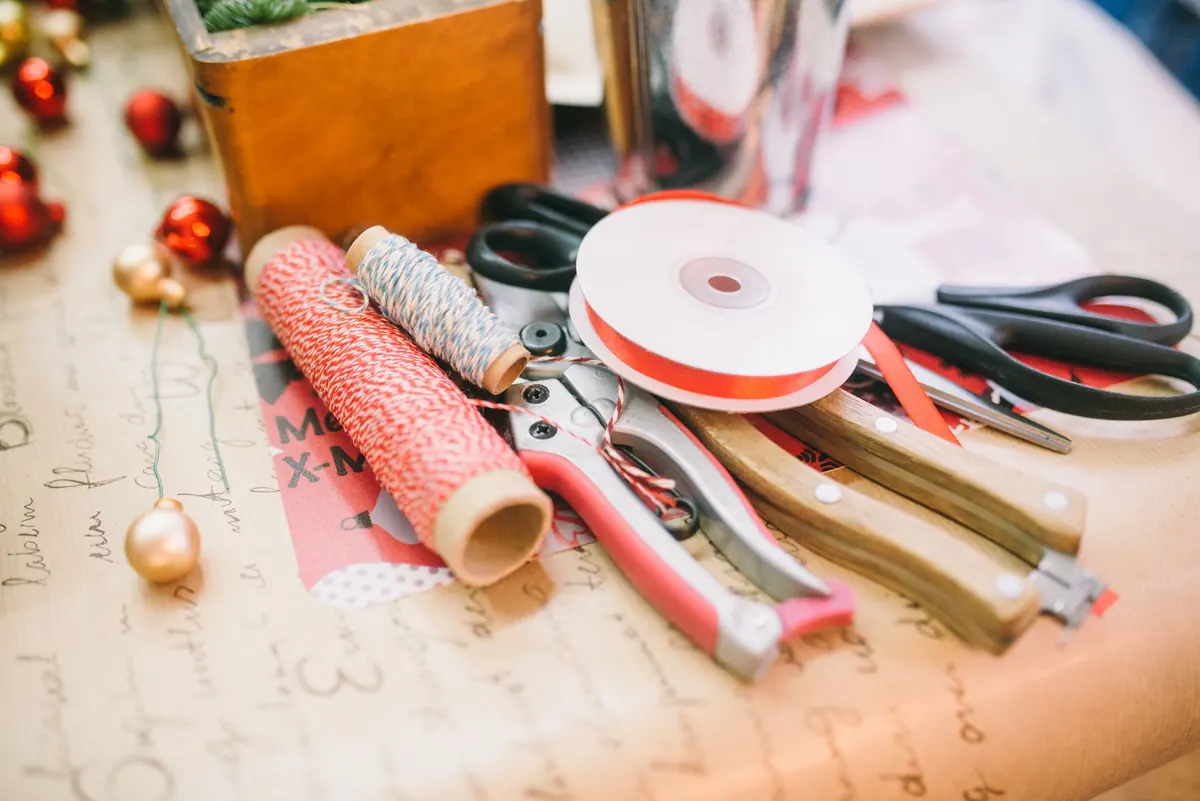
Photo: Leeloo The First / Pexels
A practical, printable checklist for a journalling weekend away, covering notebooks, pens, ink, washi tape and the...
Grain direction decides whether paper folds cleanly or cracks, tears straight or ragged, and whether a bound book...
Hardcover and softcover journals compared on construction, durability, portability and writing comfort, with...

A journal for paper, ink, and craft.
